
A company can be authorized to move forward, have a valid contractual structure and formally comply with regulation — and still make a bad decision.
“Can we do it?” is not enough
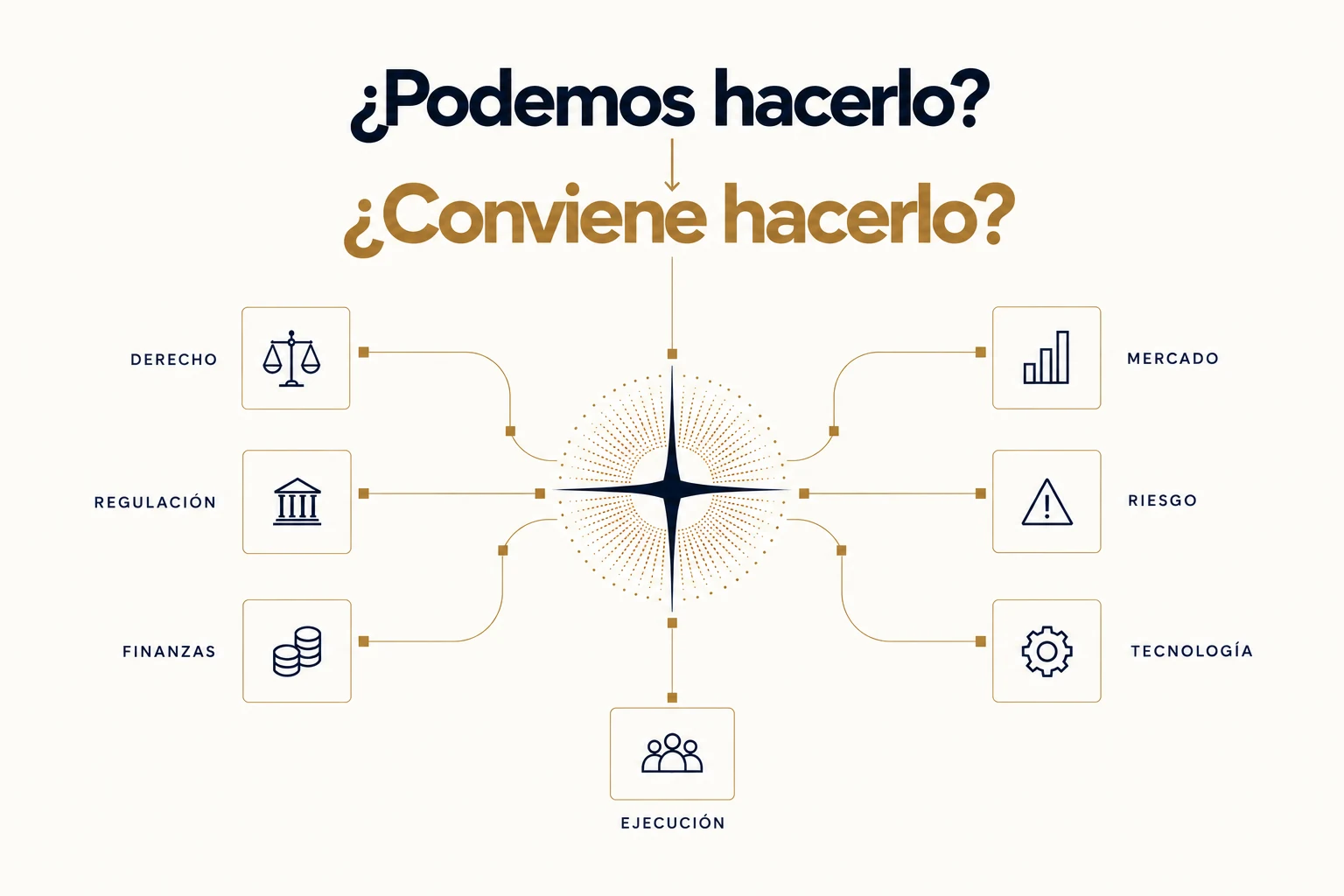
The viability of a business decision does not depend only on what the law allows. It also depends on the market in which it will be executed, stakeholder incentives, corporate structure, regulatory and competitive risks, expected costs and returns, available technology and the organization’s actual capacity to execute.
Consider a company entering a new market. The first question is usually: can we do it? Necessary, but insufficient.
How should we do it?
What structure do we need?
What risks are we taking?
What costs and expected returns are involved?
Which actors can condition the decision?
What happens if the environment changes?
Can we execute what we are deciding?
The problem with discipline-by-discipline analysis
The problem appears when each question is answered separately. Law may have one answer; regulation another; finance another; market another; risk another; technology another; execution another.
Every answer may be technically correct and still fail to produce a viable decision. The gap is not necessarily in the quality of each specialty, but in the absence of a criterion capable of reading their combined effects.
From correct answers to a coherent decision
MAATLICS works precisely at that intersection: we understand what the organization is trying to achieve, identify the conditions surrounding the decision, and turn different technical answers into one coherent path for deciding and acting.
When a decision is complex, more information does not always create more clarity. Integration does.
In which recent decision did your organization evaluate these variables separately?
Bring us your case →